Including the lower units of an outboard engine can improve the fidelity of your simulations, whether it is a resistance or a self-propelled simulation. If you are using a Rhino model of the lower unit from the engine manufacturer, it will likely be overly detailed and may include vents and other features that will add to the cell count (and therefore meshing and simulation time) but not materially affect the results. So, the first step is to simplify the geometry if possible.
Another thing to keep in mind is that the resistance of the vessel will be very different with and without the lower units in the simulation. Therefore, if you are comparing the CFD simulation to a parametric method (e.g., Savitsky), where appendages are not included, you cannot do a direct comparison. The rule of thumb that you have used for going from the bare hull EHP in these methods to installed power will no longer apply.
One reason to include them is that the drag of the lower units can affect the running pitch and heave of the model, so the resulting running attitude (and therefore the resistance) will be more realistic.
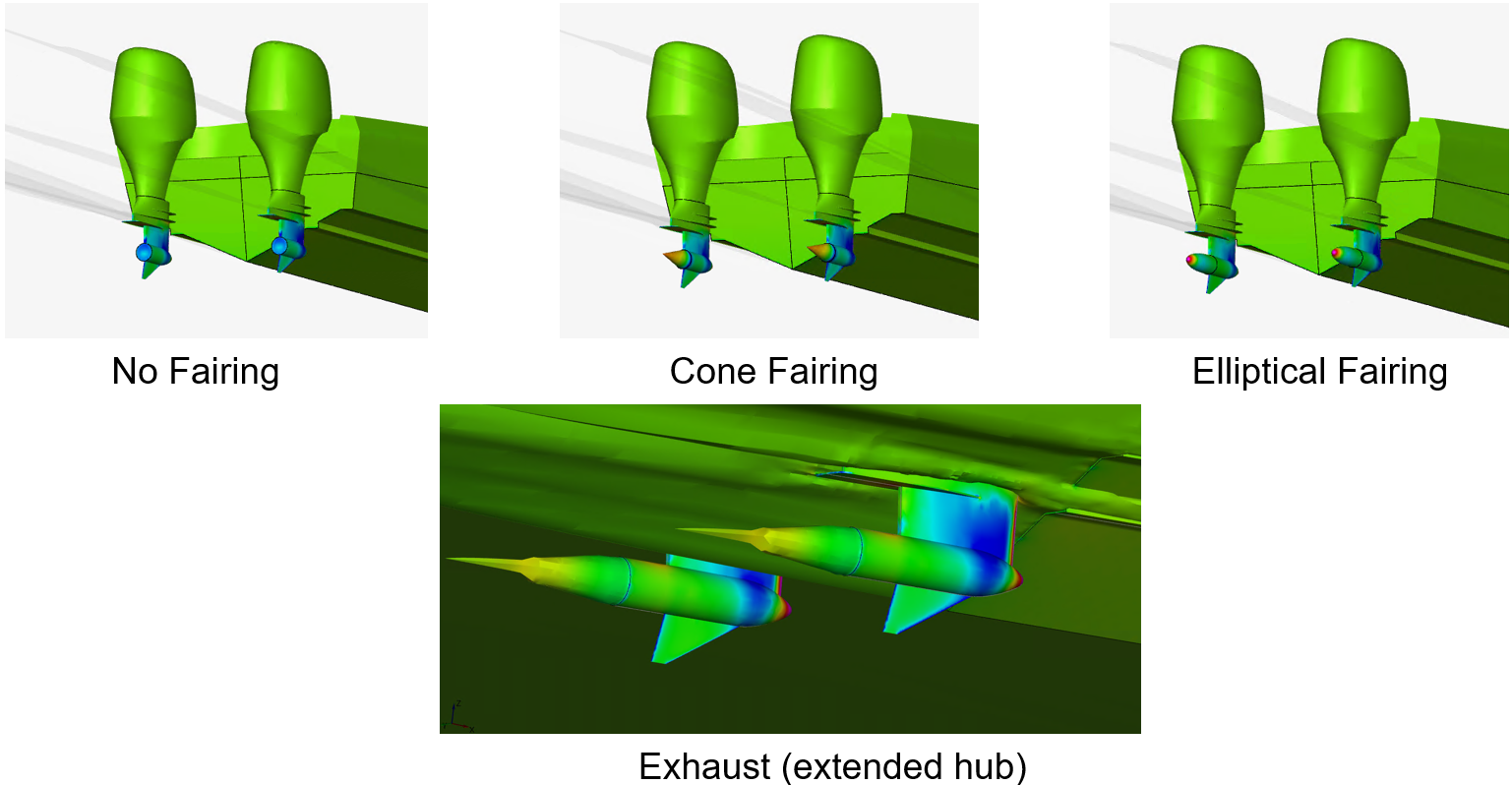
Note that the aft face of the gearbox, if not properly handled, will create significant unrealistic drag, due to the low pressure zone there. This document describes different solutions to this situation.
Was this article helpful?
That’s Great!
Thank you for your feedback
Sorry! We couldn't be helpful
Thank you for your feedback
Feedback sent
We appreciate your effort and will try to fix the article